

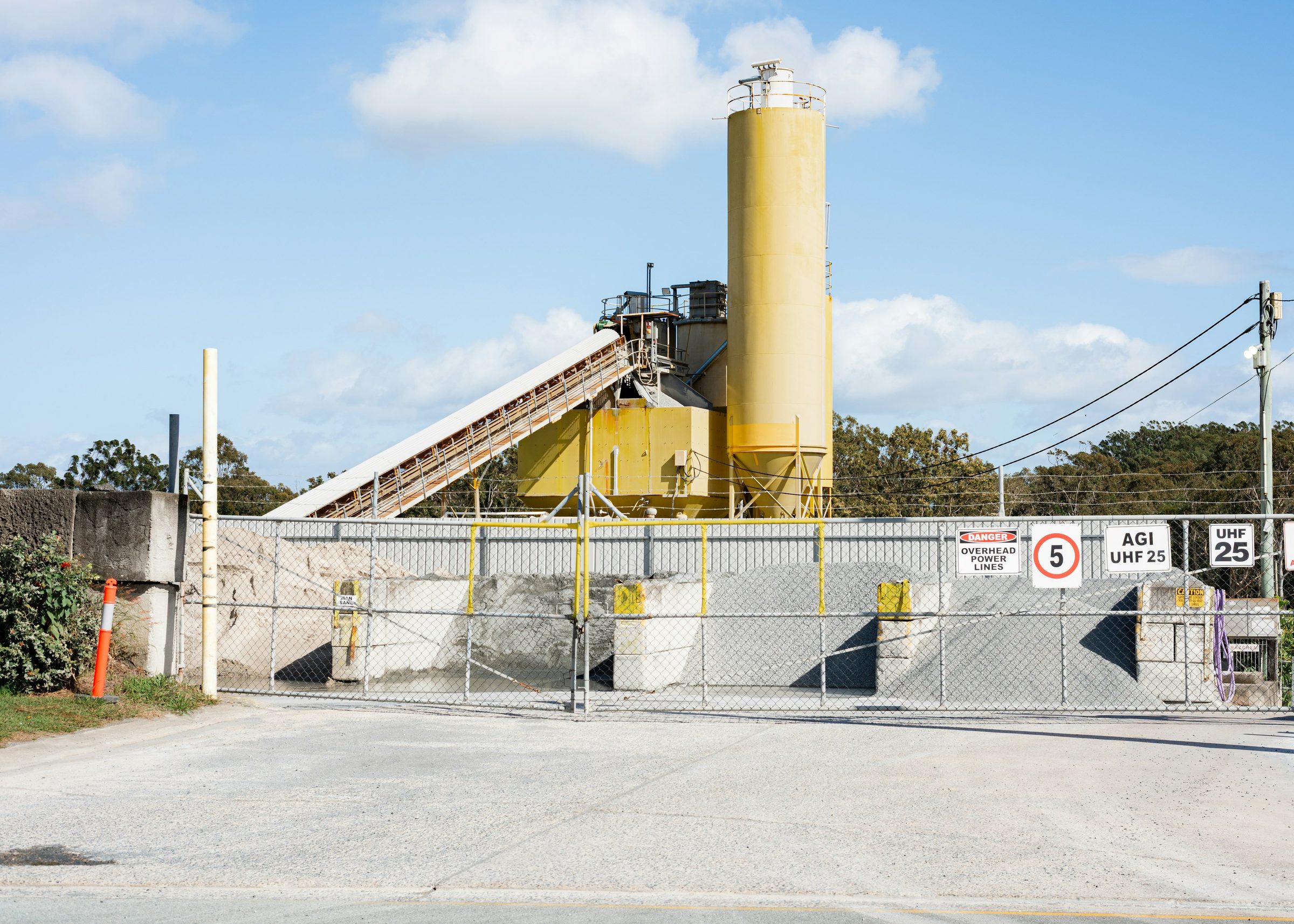
Cement
Capacity is being added at record pace across India, and consolidation is bringing acquired plants onto new control standards. Both reward discipline in capex, logistics and dealer credit.
The issues clients bring us.
- Cartelisation and bid-rigging scrutiny
- Inflated capacity-expansion and maintenance contracts
- Coal, petcoke and fly-ash billing for inputs never received
- Freight, transporter and weighbridge fraud
- Counterfeit, adulterated and re-bagged cement
- Dealer scheme, credit and territory leakage
- CO₂ and energy data behind ESG and CBAM disclosures
- Approvals and permitting for new plants and mines
What we do about them.
- Bid-pattern and price-parallelism analytics, with antitrust and dawn-raid readiness
- Capex, procure-to-pay and fuel-quality forensic review
- Transporter, vendor and dealer due diligence
- Market sweeps, test purchases and source tracing to fillers
- Recomputation of CO₂ from fuel, clinker and meter data
- Senior management due diligence for new leadership and acquired units
- ClearPath Approvals Desk for plant, mine and terminal approvals
Cement is made in eight stages from quarry to bag, and every hand-off is a control point.
Typical dry-process values are shown. Temperatures and inputs vary by plant and by cement type (OPC, PPC or PSC).
- 1Quarrying
Limestone drilled, blasted and loaded at captive mines.
- 2Crushing
Crushers break rock into small, conveyable aggregate.
- 3Raw milling
Limestone blended with clay, laterite and iron ore, ground to raw meal.
- 4Preheating
A cyclone tower heats raw meal to about 900°C with kiln exhaust gas.
- 5Kiln burning
The rotary kiln fuses the meal at about 1,450°C into clinker nodules.
- 6Cooling
An air-quench cooler sets the clinker; waste heat feeds captive power.
- 7Grinding
Clinker ground with gypsum, fly ash or slag into OPC, PPC or PSC.
- 8Dispatch
Packed in 50-kg bags or bulk, and sent by rail, road and sea.
Cartel scrutiny, carbon rules and consolidation push five of fourteen fraud risks to critical.
Priority reflects 2026 market and regulatory shifts and BDI's casework in the sector.
Along the process
Illegal mining & royalty
States may now levy tax on mineral rights (Supreme Court, 2024); tonnage gaps draw audits.
Weighbridge & gate passes
Short-loading and fake passes on limestone and outbound trucks.
Fly ash, slag & gypsum supply
The blended-cement share is rising; inputs are billed but never received.
Coal, petcoke & alternative-fuel buying
Volatile fuel prices hide grade and calorific-value mis-billing.
CO₂ and energy data
Carbon-credit intensity targets and the EU CBAM (2026) make the figures auditable.
Capex & maintenance kickbacks
A record capacity build-out widens contractor and spares exposure.
Blend & bag-weight deviation
Recipe drift and short-filling against BIS standards.
Freight & transporter collusion
Ghost trips, diesel pilferage and demurrage claims.
Across the enterprise and the market
Cartelisation & bid rigging
Competition-regulator findings on bid rigging in public-sector cement tenders (2026) keep cartel risk in focus.
Acquisition integration
As the industry consolidates, acquired plants and companies are still moving onto the acquirer's control standards.
Counterfeit bags & fake dealers
Spurious bags and fake dealership sites trade on established brands online.
Cyber & OT attacks
Ransomware and impersonation target plant control systems, ERP and payment desks.
Dealer scheme & territory diversion
Price-war rebates claimed on sales that never reach retail.
Adulteration & re-bagging
Old or damaged stock refilled into branded bags at depots.
Each leaves an evidence trail that forensic testing can follow.
In a 2018 public-sector tender, all three bidders reportedly quoted ₹7,000 per tonne; one executive called 7 his "lucky number".
Red flags
- Identical or rotating bids across tenders
- Parallel price moves after rival meetings or chat groups
How we test it
- Bid-pattern and price-parallelism analytics
- E-mail, chat and call-log review of sales teams
Fake bags copy the brand but carry no batch number, date, barcode or security seal.
Red flags
- Prices well below list at unauthorised outlets
- Sales without GST invoices or dealer codes
How we test it
- Market sweeps and test purchases
- Packaging forensics and source tracing to fillers
Unverified sellers mix old, hardened or low-grade cement into branded bags.
Red flags
- Re-bagging and moisture-damaged stock at depots
- Complaints on strength, setting time or colour
How we test it
- Sample testing against plant batch records
- Depot and retailer stock-age reconciliation
CEM I emits 800–900 kg of CO₂ per tonne against about 200 kg for CEM III, and the two cannot be told apart by eye.
Red flags
- Clinker ratios that differ from recipe logs
- Green-power and CO₂ data without meter support
How we test it
- Recompute CO₂ from fuel, clinker and meter data
- Trace sustainability and CBAM figures back to plant systems
A look-alike website of a leading cement brand took orders and advance payments into benami accounts.
Red flags
- Look-alike domains, helplines and map listings
- Customers paying advances outside official channels
How we test it
- Domain, ad and social-media monitoring
- Payment-trail tracing and takedown support
Needs span every function and site, so one partner beats many advisers.
One team covers risk, forensic, compliance and brand needs, so the business briefs BDI once. Each service can run on its own or be combined under one plan.
Mines & plants
- Quarry and royalty volumes
- Inventory and stores
- Plant OT and cyber risk
Procurement & logistics
- Coal, petcoke and vendor billing
- Freight and rail contracts
- Vendor due diligence
Sales & dealers
- Order-to-cash leakage
- Dealer and channel conduct
- Credit and collections
Brand & market
- Counterfeit and refilled bags
- Online and domain misuse
- IP enforcement
People & governance
- Employee vetting and conduct
- Whistle-blower cases
- ABAC, antitrust and DPDP
Every stage from quarry to customer maps to a service.
Find the stage where a need arises and read across to the service.
| Value-chain stage | Risk advisory | Forensic & integrity | Compliance & regulatory | IPR & brand protection |
|---|---|---|---|---|
| 01 Mining & quarry | Quarry and mining audit | Transaction forensics | Sector compliance audits; ClearPath approvals | – |
| 02 Procurement & fuel | Procure-to-pay review | Third-party and business partner due diligence | Compliance and contract tools | – |
| 03 Plant operations | Cyber and OT risk; SOP design | Anti-fraud analytics | Sector compliance audits; ClearPath approvals | – |
| 04 Stores & inventory | Inventory and stores review | Asset tracing | – | – |
| 05 Logistics & dispatch | Order-to-cash review | Covert field operations | Regulatory representation | Source investigation |
| 06 Sales & dealers | Order-to-cash review | Antitrust; dawn raids | Policy governance | Counterfeit detection |
| 07 Market & brand | – | Corporate intelligence | – | Online monitoring; takedowns; IP enforcement |
| 08 People & governance | Hire-to-retire; privacy and DPDP | Employee vetting; whistle-blowing; ABAC | Policy governance | – |
Four service clusters go into one integrated team to produce one assured outcome.
A kiln fuses raw feed into clinker. Our team fuses risk advisory, forensic and integrity, compliance and regulatory, and brand protection into one engagement, run through one lead and one plan.
Controls that hold
Leakage from quarry to cash tested and closed.
Facts that stand up
Evidence fit for boards, courts and regulators.
Regulator-ready
Compliance gaps found before inspectors find them.
Brand protected
Fake and refilled bags traced and removed.
References for the cement analysis
- Reuters, report on the Competition Commission of India's bid-rigging findings in a public-sector cement tender, March 2026.
- Ministry of Environment, Forest and Climate Change, greenhouse-gas emission-intensity targets for cement under the Carbon Credit Trading Scheme, 2025.
- European Union, Carbon Border Adjustment Mechanism, definitive phase from January 2026.
- Supreme Court of India, ruling on states' power to tax mineral rights, July 2024.
- Cement company dealer and customer advisories on fake websites and spurious bags, 2025.
- CEMBUREAU, cited by BACI, on CO₂ intensity by cement type, May 2024.
- Times of India and VARIndia, reports on a look-alike cement-brand website, May 2019.
- BDI analysis of the standard dry-process cement manufacturing flow; typical values, which vary by plant and cement type.
Keep the record with BDI's governance tools.
The numbers behind the risk.
Record production, record capacity additions and production-linked incentives are pulling investment into plants, suppliers and dealers at a pace controls rarely keep up with.
Regulatory and market updates
- Auto PLI doubled
The PLI allocation for automobiles and components was doubled to ₹5,940 crore in the Union Budget 2026-27; the scheme runs to 31 March 2028.Source: IBEF
- Capacity super-cycle in cement
CRISIL Ratings expects 150–160 MT of cement capacity to be added between FY25 and FY28, with about ₹1.25 lakh crore of investment for 130 MT of grinding capacity.Source: IBEF
- A paint war in decoratives
The market leader's share of decorative paints fell from 59% to 52% in the twelve months to March 2025 as a well-funded new entrant built the industry's second-largest capacity, reshaping dealer economics and promotions.Source: Business News Today, citing Elara Securities
- National Manufacturing Mission
Targets a 25% manufacturing share of GDP by 2035; PLI schemes worth ₹1.91 lakh crore across 14 sectors have generated ₹2.16 lakh crore of investment.Source: IBEF
Under Operation 300bn the UAE is doubling industry's contribution to GDP, bringing new plants, joint ventures and supplier networks into a market that also imports most of its vehicles and building products.
Regulatory and market updates
- Tougher AML law
Federal Decree-Law No. 10 of 2025 replaced the 2018 AML law from 14 October 2025, widening scope, adding tax evasion as an explicit predicate offence and raising penalties: relevant to trade-based money laundering through goods and parts.Source: Hadef & Partners
- A softer 2026
Real GDP fell 2.1% year on year in Q2 2026 as regional conflict disrupted travel and trade; H1 growth was 0.4%.Source: Khaleej Times, citing FCSC
- 01Paint & Building ProductsA market reshaped by new entrants and dealer incentives, where refilled cans, look-alike packs and fake dealerships follow every successful brand.
- 01AutomobilesFrom PLI-funded suppliers to EV start-ups and a vast dealer network, the automotive value chain now runs on more partners than ever.
- 01Other ManufacturingChemicals, electronics, engineering and consumer goods share the same exposures: vendor capture, inventory leakage and counterfeits that trade on a trusted name.
Platforms referenced: FraudSentinel360Whistle SentinelPactinexIP Octopus M2
Sources
- IBEF, Automobile Industry in India, Updated Sep 2026.
- IBEF, Cement Industry in India, Updated Sep 2026.
- IBEF, Manufacturing Sector in India, Updated Sep 2026.
- Business News Today, citing Elara Securities, Decorative paints: market leader faces Q4 FY26 results as the paint war intensifies (headline paraphrased), 2026.
- Khaleej Times, UAE industrial exports hit Dh262b as sector's GDP contribution climbs by 70%, 2026.
- Best Selling Cars Blog, United Arab Emirates full year 2025, Feb 2026.
- Reuters (via New Straits Times), UAE's real GDP grows 6.2% in 2025, May 2026.
- Hadef & Partners, A new era for AML/CTF/PF in the UAE: Federal Decree-Law No. 10 of 2025, Oct 2025.
- Khaleej Times, citing FCSC, UAE economy grows 0.4% to Dh961.9 billion in H1 2026 as non-oil sectors expand, Oct 2026.